
 Baku 21° C
AFP talks on work of Azerbaijani deminers in Garabagh
- 12 November, 2026
- 11:02
Stay up to date with the top news!
Garabagh and the adjacent districts of Azerbaijan, which remained under Armenian occupation for many years, are among the most heavily mine-contaminated areas in the world, according to a story by Agence France-Presse (AFP) from the village of Ashaghi Abdurrahmanli in Azerbaijan's Fuzuli district, Report informs.
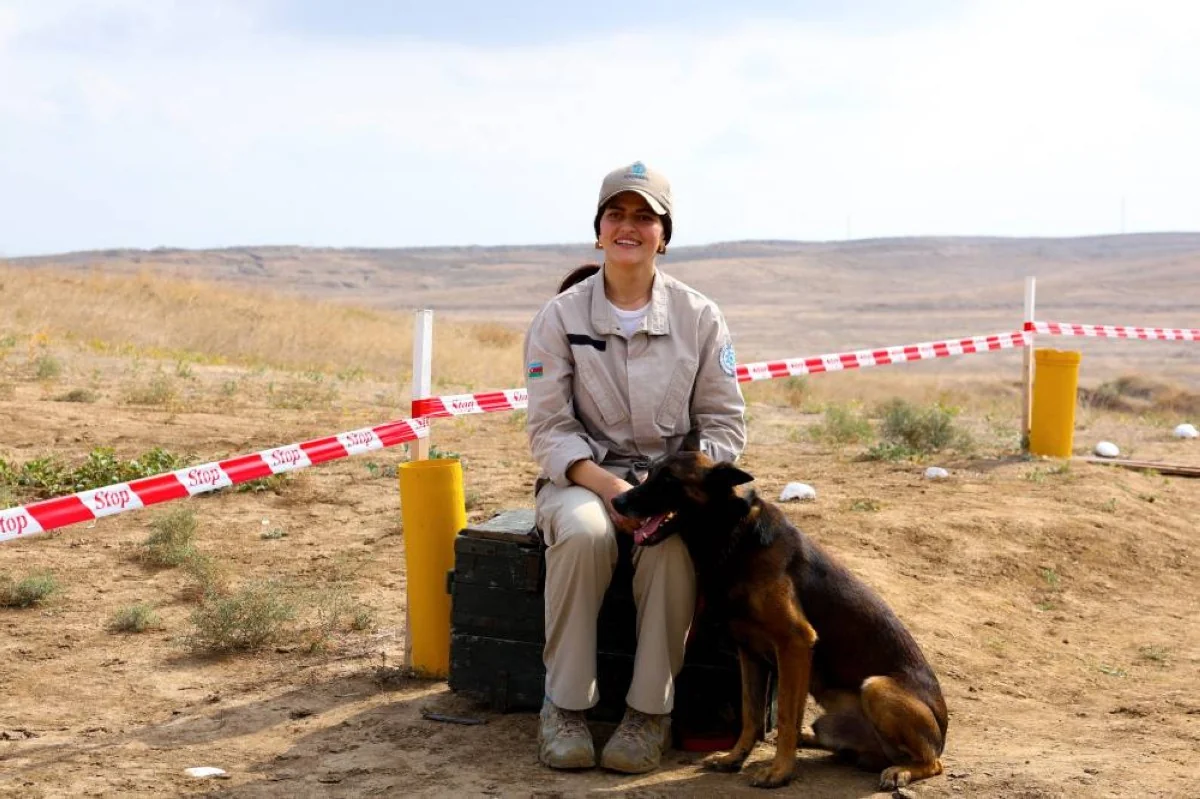
The piece features a deminer named Afsana Bayramova, who, accompanied by her sniffer dog, Rocky, searches for landmines and unexploded ordnance along the former front line.
Bayramova is one of only a handful of women sappers in a traditionally male-dominated profession.
Her companion Rocky is a Belgian Malinois born in 2023 and brought from Croatia.
Rocky signals possible finds by sniffing insistently, wagging his tail, then sitting and staring at one spot, Bayramova explained.
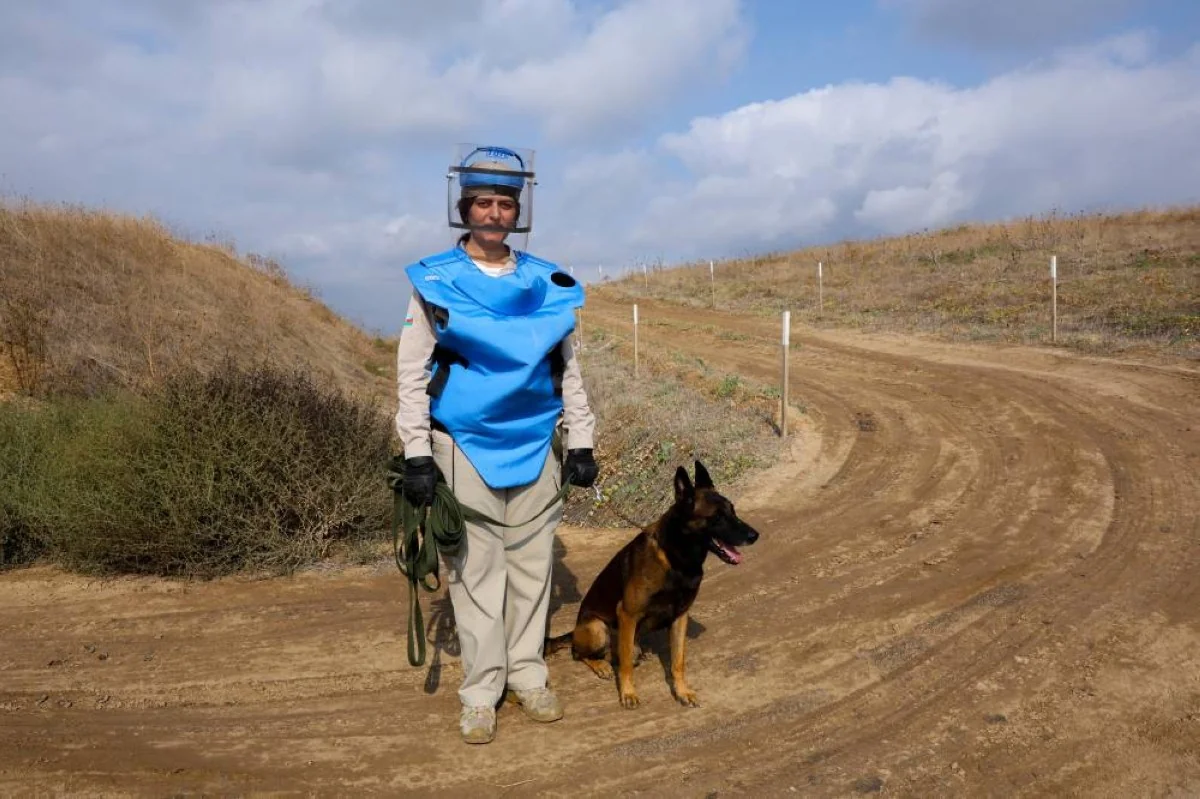
"We treat every signal as a mine," she told AFP.
Bayramova's family comes from Zangilan, a district Azerbaijan retook during a 44-day war with Armenia in 2020.
"I didn't want to stand aside," she said, explaining why she became a deminer.
"I also wanted to make my contribution to our country."
Jabir Samadov, an operations manager with Azerbaijan's mine action agency ANAMA, said teams had cleared more than 309,000 hectares (763,000 acres) since 2020, neutralising about 69,000 mines and nearly 200,000 unexploded munitions.
Mine blasts have killed 73 people and wounded 370 since the 2020 war, according to Azerbaijani authorities.
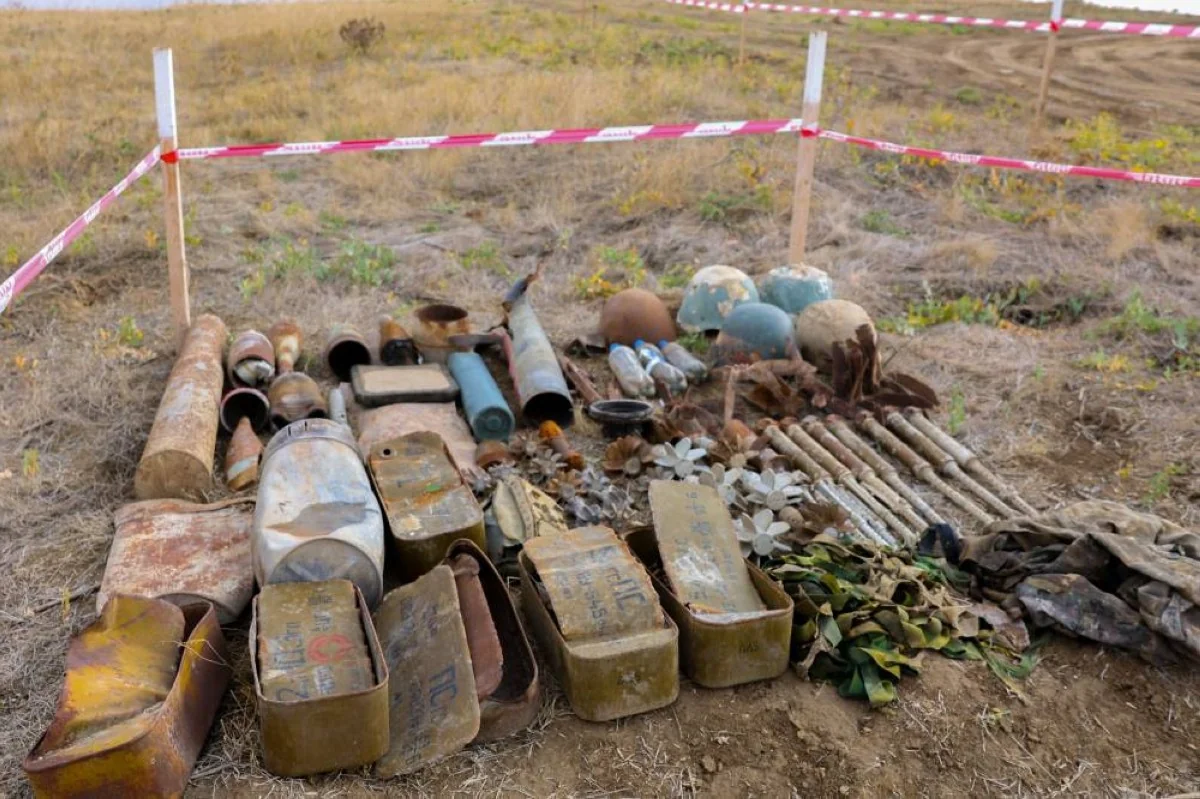
Ashaghi Abdurrahmanli is "heavily contaminated," Samadov said.
Mines along former Armenian defensive positions and unexploded munitions from Azerbaijani bombardment litter the area.
Before heading into the minefields each morning, dogs must find sample explosives in a test area. Those that fail the task are kept back.
In the field, handlers use long leads to let the dogs explore. When a suspected explosive is detected, a second dog checks the approach before a deminer investigates.
For the dogs, the reward is a ball -- but only after confirmation of a positive find.
"Rewarding false indications could encourage dogs to repeat them," Huseynov said.
The dogs' work is hampered by the hot, dry summers of Azerbaijan's lowlands, where temperatures can exceed 40C.
Bayramova said the animals contend with heat from both the sun and the ground beneath their paws.
Illness and injuries to paws can keep dogs from the field.
Those that retire are often adopted by their handlers.
Some of those affected by landmines now volunteer to help clean up the area.
Asif Ahmadov, who fled the area in 1992, survived the war but lost his brother and a leg four days after the fighting ended.
"We had grazed our flocks there since childhood, so we knew these places very well," he said.
One day in 2020, Ahmadov recalled turning back, then hearing an explosion.
Seeing that his brother's leg had been blown off, he pulled off his belt, ready to stem the bleeding, only for a second mine to send him flying.
When he regained consciousness, his brother was dead. Ahmadov had lost his left leg and his right was badly injured.
"I didn't move after that, because I knew my second mistake would mean my death," he said.
His father carried him out of the minefield, and he went on to spend three months in hospital.
"Nothing remains of my old life," he told AFP, adding that he had never revisited the site.
Now he volunteers with ANAMA, warning villagers and schoolchildren against entering dangerous ground.
For Bayramova, the reward is seeing homes rise on land she helped clear.
She recently returned to the Agdam district, where she had helped clear three villages. Now there are houses being constructed.
"We see settlements being rebuilt, people returning, farming," she said. "That makes us proud."
Author