 Baku 21° C
BCG: Kazakhstan poised to strengthen its position in critical minerals market and attract investment
- 02 November, 2026
- 13:39
Stay up to date with the top news!
Current conditions in the global critical minerals market offer Kazakhstan an opportunity to strengthen its position in global supply chains and attract new investment, according to a study by Boston Consulting Group (BCG), cited by Report.
Under BCG's forecasting model, by 2040, demand for several key mineral commodities, including rare earth elements, graphite, copper and lithium, could reach between 120% and 250% of projected supply.
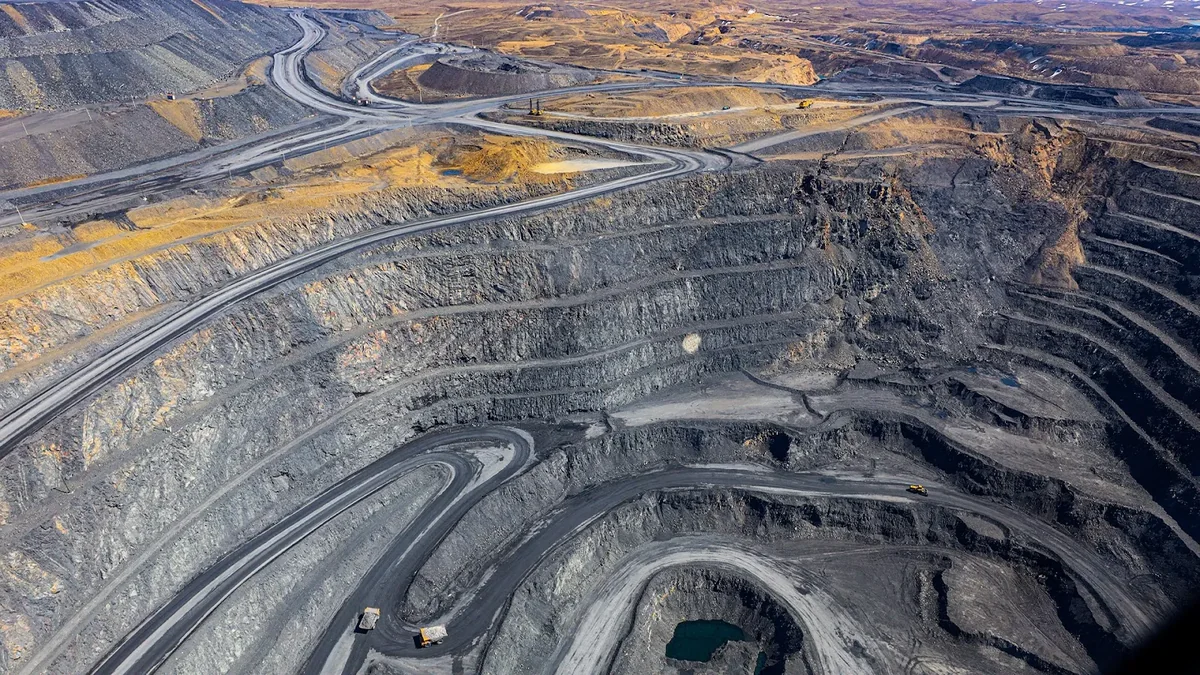
This creates new opportunities for resource-rich countries, including Kazakhstan. The country has significant explored reserves of copper, chromium, tungsten, lithium, tantalum, rare earth elements and other critical minerals.
According to the Organization for Economic Co-operation and Development (OECD), Kazakhstan has the potential to supply 21 of the 34 raw materials classified by the European Union as critical. At the same time, around 65% of the country's territory remains underexplored geologically, creating prospects for the discovery of new deposits and attracting investment.
BCG Managing Director and Partner Mikhail Moguchev believes that the specific characteristics of Kazakhstan's mineral resource base create additional opportunities for the country.
"Gallium, germanium, rhenium, beryllium and tantalum are by-products of Kazakhstan's metallurgical operations. Although their contribution to export revenues remains relatively small, their importance and value to global supply chains are disproportionately greater. Kazakhstan's strategic role in this segment is determined not so much by production volumes as by the importance of the industries whose production chains could be disrupted even by a minor shortage of these raw materials," he said.
According to Moguchev, as quoted in BCG's press release, growing global demand for these minerals provides additional incentives to develop and modernise the country's production facilities.
The study also notes that industrial companies underestimate the risks associated with shortages of critical minerals. In particular, they often focus on the cost of raw material purchases, analyse only direct suppliers, and pay insufficient attention to mineral processing and the ownership structure of production assets.
Of particular importance are so-called "mosquito minerals" – gallium, germanium, iridium, arsenic and other elements that are used in small quantities but play a crucial role in global production chains. Shortages of these minerals could force companies across various industrial sectors to halt operations.
BCG Managing Director and Partner Mikhail Volkov stressed that Kazakhstan's role in global supply chains would depend not only on its resource base but also on the development of processing capacity.
"Kazakhstan is already taking steps to move beyond raw material exports towards deeper processing and the development of higher value-added manufacturing. Attracting international partners, investment and advanced technologies is becoming an important priority," he said.
BCG also highlights opportunities for public financing of critical minerals projects. According to the International Energy Agency, government funding commitments for such projects in developed economies reached approximately $65 billion in 2025, more than four times the 2023 level. However, in some countries, less than 10% of the allocated funds have been disbursed.
Volkov noted that the current situation presents Kazakhstan with new opportunities to develop the sector.
"However, capitalising on these opportunities will depend both on the country's ability to build an attractive portfolio of projects for international investors, with a balanced risk-return profile, including through support measures and targeted incentives, and on its ability to establish systematic engagement with funds and financing mechanisms in developed countries," he concluded.
At the same time, the BCG study identified a paradox: developed countries recognise the growing shortage of critical minerals, have adopted critical minerals strategies and allocated public funding to catalyse private investment, yet the actual deployment of these funds falls significantly short of target levels.
"This paradox can be explained by a shortage of high-quality projects with a balanced risk profile," the company noted.
Author