
 Baku 21° C
From science to daily life: Insights from TECHNOVATION Dubai
- 19 November, 2026
- 15:36

Stay up to date with the top news!
TECHNOVATION Dubai brought one of today's most pressing issues into focus: the intersection of science, innovation and the human factor.
As Report's correspondent in Dubai informs, a central message emerged from the event: however advanced technology becomes, its true value depends on how well it fits into people's lives and how clearly and honestly it is explained to society.
A major shift toward a smoke-free future
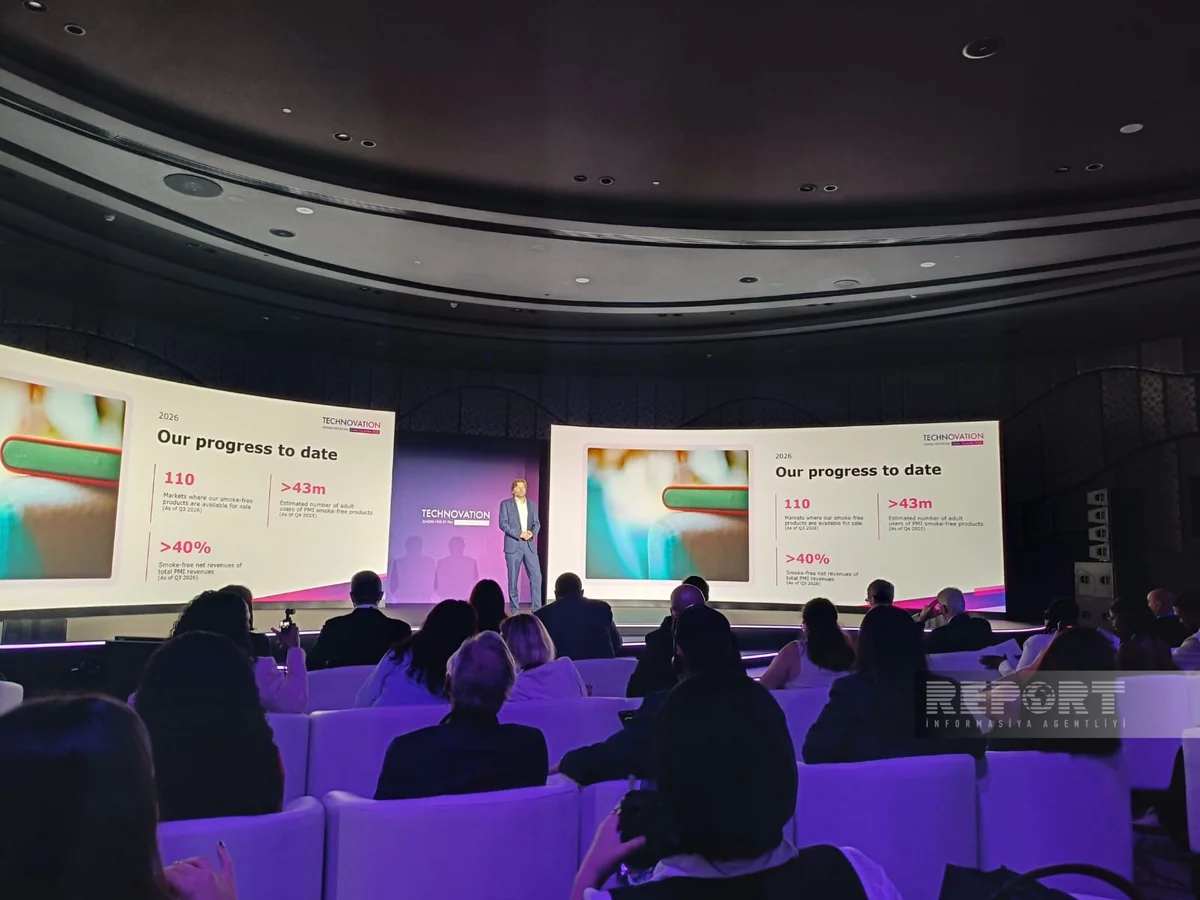
Gijs de Best, Philip Morris International's (PMI) President for South Asia, Indochina, the Commonwealth of Independent States, the Middle East and Africa, said the number of people using smoke-free products worldwide had exceeded 43 million, including 8 million in the region he oversees. The company, which operates in 110 countries, now generates more than 40% of its net revenues from these alternative products.
Since announcing its "Smoke-Free Future" strategy in 2016, PMI has invested more than $16 billion in developing this business and directed 77% of its commercial expenditure toward it. Its stated goal is to encourage the world's approximately 1 billion smokers to quit or, at least, switch to smoke-free alternatives. De Best stressed that decisions along this path should rest on scientific facts and evidence, rather than emotion or ideology.
The human side of technology: Design and local culture
Can even the most sophisticated technology succeed if it does not fit people's everyday habits? Another panel explored this question. Christos Kiritsis, PMI's Vice President of Smoke-Free Products, and Natasha Carella, Director of Dubai Design Week, said the human factor was decisive in determining whether innovations succeeded.
Kiritsis said scientific substantiation and functionality alone were not enough: a product also needed to meet people's lifestyle needs, social circumstances and emotional expectations. While consumers in some countries prefer digital information channels, those elsewhere place greater trust in face-to-face communication and personalized advice.
Carella approached the issue through a creative and cultural lens. Adapting a global product to a local market, she said, means more than decorating it with a country's architectural symbols or traditional patterns. Meaningful localization requires listening to local communities, understanding their stories and engaging sincerely from the project's outset. Today's consumers can readily distinguish superficial decoration from a deeper cultural connection.

From confusion to clarity: Explaining science in plain language
Ensuring that innovations are properly understood is just as important as presenting them. During a discussion titled "From Confusion to Clarity: Helping Adult Consumers Make Informed Choices," experts examined the confusion created by information overload.
Tomoko Iida, PMI's Senior Director of Scientific Engagement, said a degree of skepticism toward industry-funded research was natural. For that reason, she said, the company makes all its scientific publications available to the public and open to scrutiny by independent researchers.
Iida described the smoke produced by burning tobacco, rather than nicotine, as the principal cause of smoking-related diseases, saying this was firmly established scientifically. She pointed to Sweden and Japan as examples, attributing a halving of Japan's smoking rate over the past decade, from 20% to 10%, to the shift toward non-combustible alternatives. She also cited Sweden's position among countries with the lowest lung cancer rates.
Sohati head Wassim Kari said the rapid spread of conflicting views and clickbait across social media and online platforms made it essential to address issues in all their complexity, rather than in black-and-white terms. To build trust, scientific findings should be presented with clear context, explaining the circumstances in which they apply and the people they concern, rather than as isolated figures.
The psychology of dependence and the distinction between nicotine and smoke
Consultant psychiatrist Dr. Mohammed Eltaweel addressed the medical and psychological aspects of the discussion, also examining the influence of people's social environment. He said peer pressure often led young people to believe nicotine made them stronger, more confident or more mature, describing this as a misconception.
Eltaweel explained that nicotine, like caffeine, is a stimulant that can cause dependence. Stopping either substance can lead to anxiety, difficulty concentrating and mood changes, while excessive consumption can increase heart rate, he said. He argued, however, that the main danger lay less in nicotine itself than in inhaling smoke produced by combustion.
The doctor stressed that quitting smoking and nicotine altogether was the best choice. However, citing an estimated 1.2 billion people worldwide affected by the habit, he said those unable to quit should not face stigma or judgment. Instead, doctors should listen to patients, check their understanding of the information provided, and offer psychological support and medical advice about alternatives he described as less harmful.
Protecting young people and communicating with empathy
Preventing minors from accessing these products was another key topic. Iida said a "zero-tolerance" policy applied, citing AI systems used in Tokyo stores that scan customers' faces and alert staff to check identification if they appear to be under 25.
She linked these measures to heated tobacco use among schoolchildren in Japan remaining below 0.2%.
At the close of the discussion, participants identified three principles for effective health communication: listening without judgment, communicating information faithfully to the science without resorting to clickbait, and showing empathy. As Iida emphasized, understanding what someone leaves unsaid and establishing sincere communication can sometimes achieve more than even the most powerful technology.
The discussions at TECHNOVATION Dubai converged on a shared message: innovation succeeds when science is communicated transparently, design responds to people's needs and communication is grounded in sincerity.

Author