
 Baku 21° C
Marianne de Jong: The Netherlands ready to take next step in developing relations with Azerbaijan - Interview
- 26 October, 2026
- 10:00
Stay up to date with the top news!
The chapter of difficult relations between Azerbaijan and the Netherlands is a thing of the past. This is evidenced by the intensification of political dialogue and the visit of Dutch Foreign Minister Tom Berendsen to Azerbaijan on October 26. This will be the first visit by a head of the Dutch Foreign Ministry to Baku in the last 12 years and may provide an additional impetus to the development of bilateral relations.
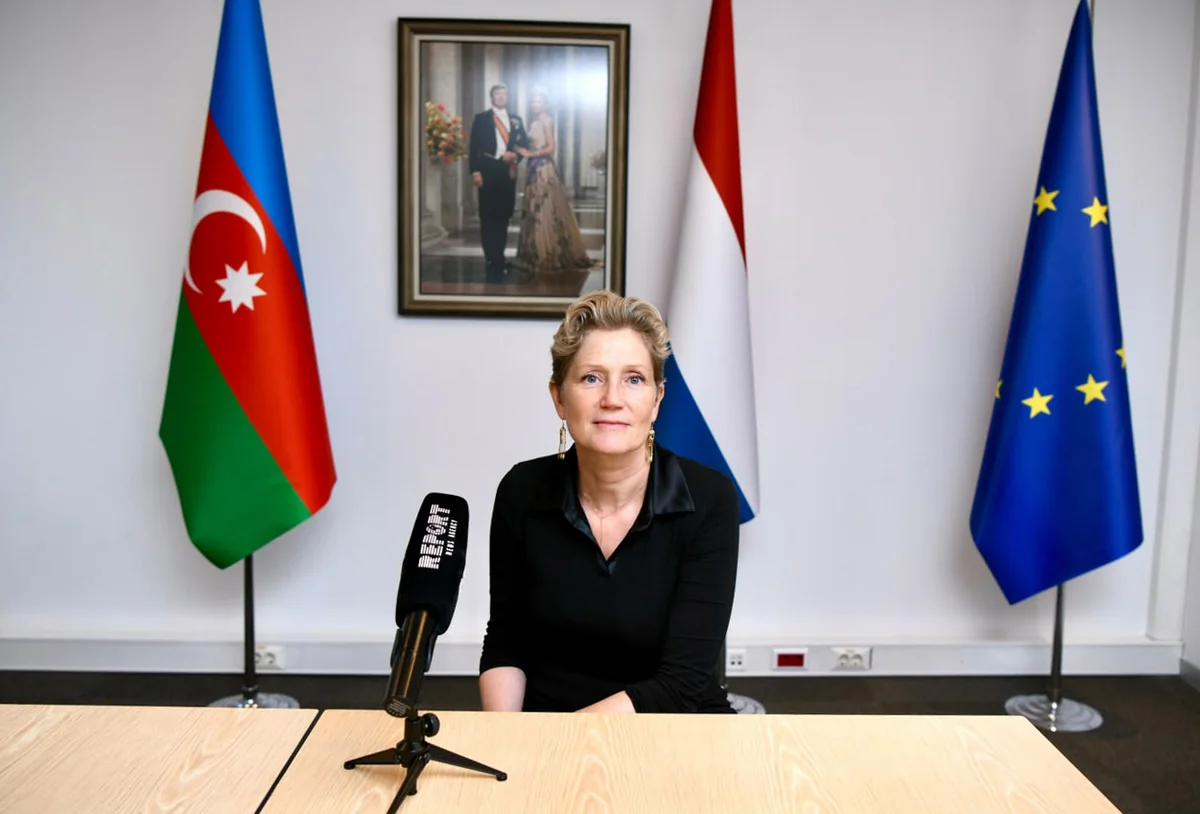
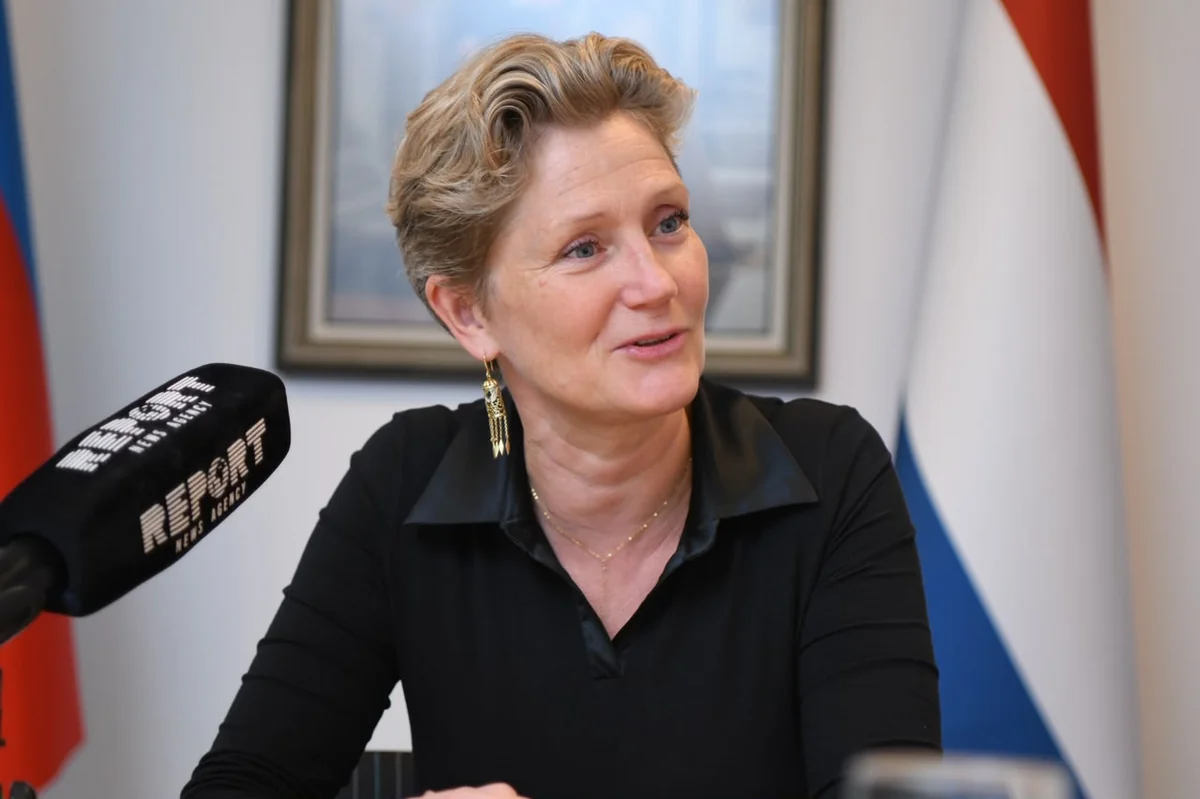
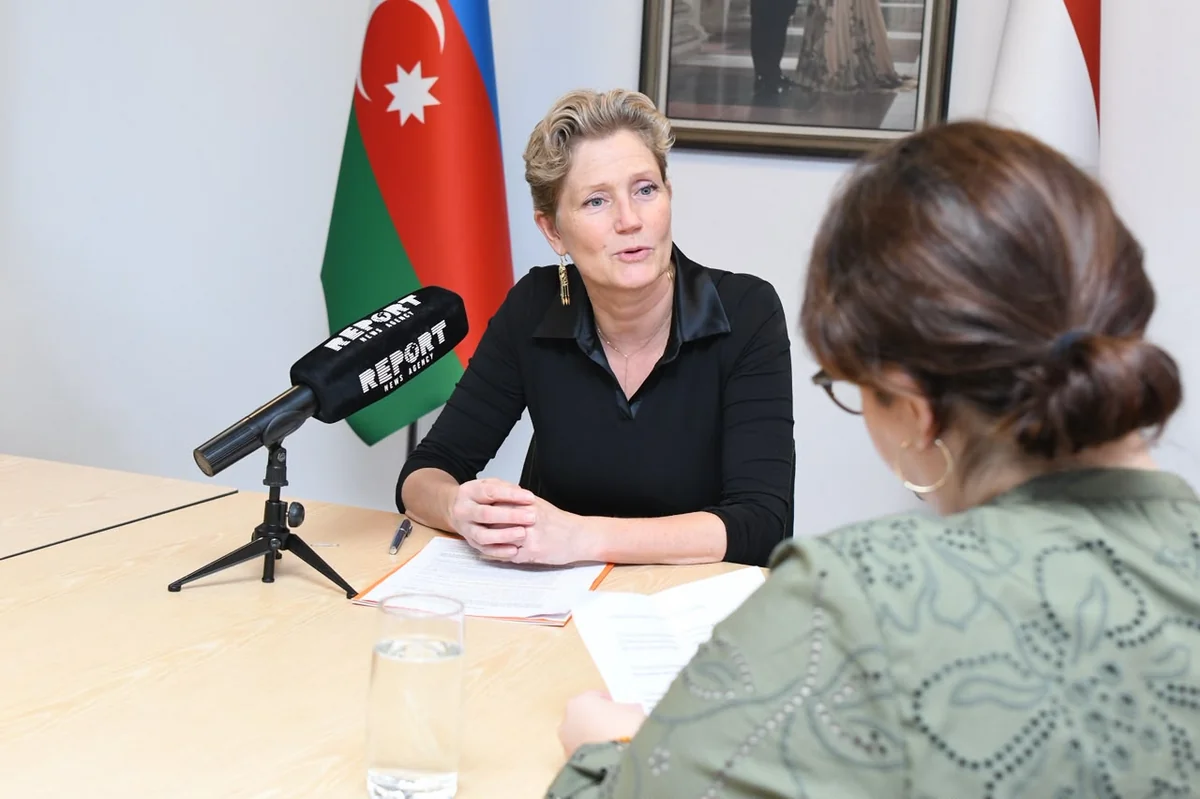
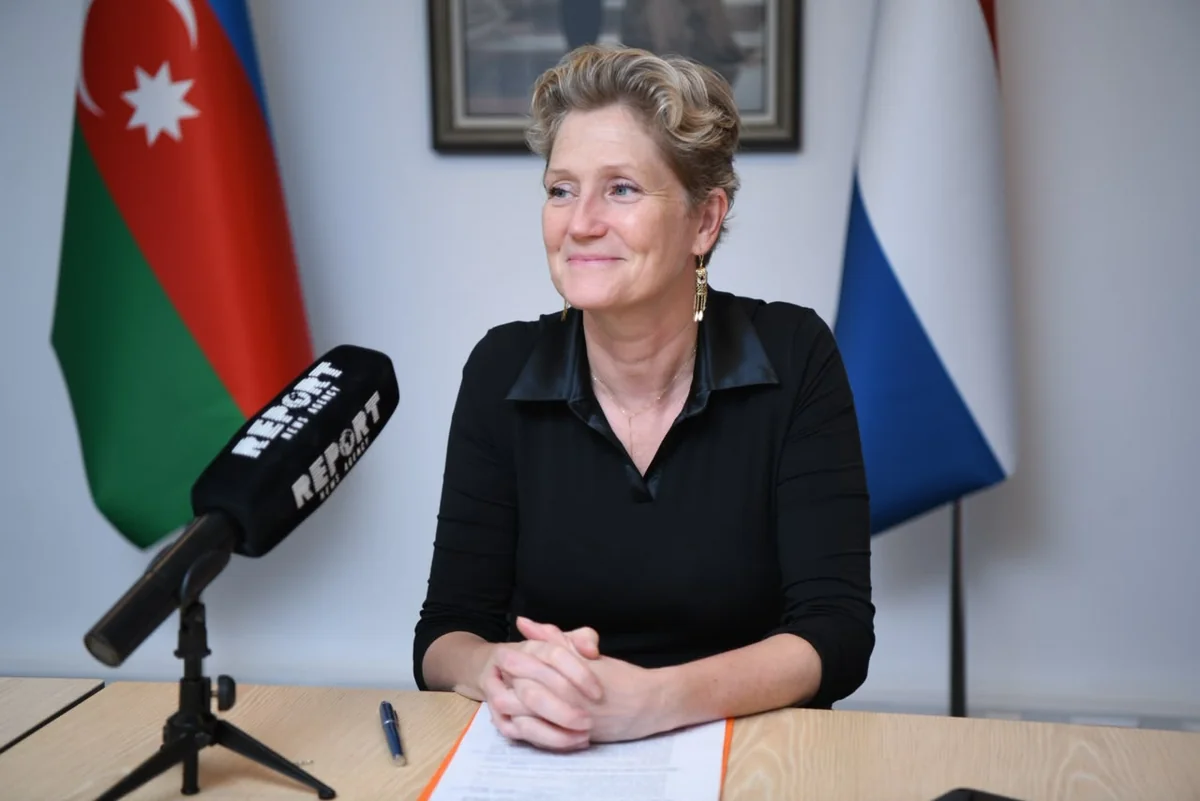
In an interview with Report, the Ambassador of the Netherlands to Azerbaijan, Marianne de Jong, summed up the first year of her diplomatic mission in the country, assessed the current state of bilateral relations, and spoke about the priority areas of cooperation. The head of the diplomatic mission also shared her expectations for the visit of the Dutch Foreign Minister to Azerbaijan, the prospects for expanding economic ties, and the opportunities for taking the Azerbaijani-Dutch partnership to a qualitatively new level.
- How do you assess the development of bilateral cooperation between the Netherlands and Azerbaijan in 2026? What priority areas and initiatives are planned to be implemented in 2027 to strengthen relations between the countries?
- Let me start by saying that by the time of my arrival in Azerbaijan, bilateral relations were already showing positive dynamics. We are very pleased with the progress achieved over the year and the restoration of trust between the two countries. After a period of difficult bilateral relations, it was important for us to regain this trust and create a foundation for the further development of cooperation.
Now is the right time to take the next step and achieve concrete results. We hope that the visit of Dutch Foreign Minister Tom Berendsen to Baku will contribute to achieving this goal. For us, this visit will be an opportunity to adopt a bilateral roadmap for 2026–2028, which will cover a wide range of areas and reflect our ambitions in relations with Azerbaijan.
We are working closely with the Azerbaijani authorities to turn this roadmap into a concrete action plan. As I have already noted, our goal is to achieve tangible results. This is exactly what our work with Azerbaijan in 2027 will be focused on.
We are currently discussing the most effective next steps with our Azerbaijani colleagues. In particular, we are considering the possibility of a visit by the Dutch Trade Envoy Marc Hasselaar to Baku in the first half of 2027. His visit will perhaps be timed to coincide with one of the major events in Azerbaijan, such as the Caspian Agro exhibition, in which the Netherlands traditionally participates. At the same time, we are ready to consider other possibilities as well.
We also expect to once again organize a Netherlands pavilion at Caspian Agro-perhaps even larger than last year. In any case, I am confident that a representative delegation of Dutch companies will participate in the exhibition.
Furthermore, we would like to more actively utilize the recently established Netherlands-Azerbaijan Chamber of Commerce. It was launched in May this year in The Hague. We intend to provide it with opportunities to work in Baku and participate more actively in bilateral cooperation. We are confident that this will help strengthen relations between our countries and achieve concrete results.
- How do you assess the current level of trade and economic cooperation? In which sectors is there potential for expanding interaction and attracting Dutch investments?
- I believe that our cooperation already has a solid foundation and significant potential for further development. Until now, our interaction has been focused primarily on transport connectivity, agriculture, and water management. At the same time, we see opportunities to expand cooperation beyond these traditional areas. Among the promising sectors are sustainable agriculture, horticulture, water technologies, logistics, and renewable energy. We are convinced that combining the experience and capabilities of the Netherlands with Azerbaijan's priorities in the field of economic diversification will open up new prospects for the introduction of innovations and the digitalization of the economy.
As I have already noted, our goal is not limited to identifying objectives, but to achieve concrete results. We are confident that such an approach will provide an additional impetus to the development of bilateral relations, and we look forward with great interest to the further deepening of our cooperation.
- Dutch companies are showing interest in transport and logistics projects in Azerbaijan. In particular, the C. Steinweg Group recently discussed the possibilities of implementing joint projects within the Middle Corridor with Azerbaijan's Minister of Economy Mikayil Jabbarov. What role could the Netherlands and its companies play in the development of this transport route, and how do you assess the prospects for further cooperation in this direction?
- The Netherlands has significant expertise in port management, warehouse logistics, maritime transport, and supply chains. Against the backdrop of the Middle Corridor's growing role as an important and highly demanded alternative route ensuring safe transport links between Europe and Asia, this direction is of particular interest to us.
Specifically, companies like the C. Steinweg Group could contribute to the development of logistics infrastructure through investments in port facilities and the expansion of cargo handling capacities, taking into account the growing demand for transportation.
We see significant potential for improving cargo handling efficiency, optimizing logistics processes, and strengthening transport connectivity between Europe and Asia. In addition, the Netherlands can assist in the digitalization of the Middle Corridor by offering advanced technological solutions and utilizing its expertise in this field.
- At what stage is the preparation of new bilateral agreements between Azerbaijan and the Netherlands? How many documents are currently being prepared for signing, what areas do they cover, and when can we expect them to be signed?
- Frankly speaking, as I noted earlier, our bilateral relations were complicated for political reasons for some time. I think it is safe to say that we have already turned this page, which I am very happy about. We have opened a new chapter in our relations, characterized by positive dynamics and a focus on the future. It is in this context that our country's Foreign Minister's visit will take place. Our primary task is to identify areas and opportunities for cooperation that will bring tangible benefits to both countries. Once these priorities are clearly defined, we will be able to determine the necessary legal mechanisms and conclude bilateral agreements for their implementation.
In the past, various arrangements and agreements have already been in place between our countries. We intend to build on this foundation and develop new cooperation mechanisms where there is a clear mutual interest. At the same time, this is not just about agreements at the intergovernmental level. Individual companies are also interested in concluding agreements and memorandums of understanding with relevant Azerbaijani institutions in specific sectors.
We believe that the aforementioned roadmap for 2026–2028 will serve as an excellent basis for identifying such opportunities and advancing the necessary agreements. We hope that in the near future we will be able to make progress and move to the next stage of bilateral cooperation.
- An intergovernmental commission on economic cooperation is not yet in place between Azerbaijan and the Netherlands. Is the possibility of creating such a mechanism being considered? To what extent could an intergovernmental commission contribute to the systematic development of trade and economic ties and the implementation of joint projects?
- The Netherlands traditionally does not use intergovernmental economic commissions as a standard mechanism for regulating bilateral economic relations. We more often prefer direct institutional dialogue, sectoral cooperation, and business platforms. Thus, our approach is somewhat different.
Nevertheless, we are open to discussing the most effective ways to organize and strengthen economic cooperation with Azerbaijan. The previously mentioned roadmap will help us determine priority sectors, specific projects, and the need to create additional mechanisms to facilitate cooperation. Our task is to ensure that the chosen format yields practical results, promotes the development of trade and investments, and strengthens partnerships between Dutch and Azerbaijani companies.
In the Netherlands, we say: "Form follows function." We are open to this approach, and as bilateral relations strengthen, we will continue to discuss with our Azerbaijani colleagues how best to ensure regular dialogue and turn our shared ambitions into concrete cooperation opportunities.
- Azerbaijan and the Netherlands have significant tourism potential, but the lack of direct flights may limit the development of tourism and business contacts. Is the possibility of launching direct flights between the two countries being discussed?
- Personally, I would very much like to see direct flights established between the Netherlands and Azerbaijan. I am confident that this will become a reality in the future because there is a market for it. Naturally, investors and airlines will take notice and take advantage of the emerging opportunities.
Direct flights could foster the development of tourism, trade, investment, and business contacts. We are seeing an increase in the number of Dutch tourists visiting Azerbaijan, which indicates growing awareness of the country in the Netherlands and an increasing interest in its rich culture, nature, and history. This year, during the Formula 1 races, many Dutch tourists visited Azerbaijan-even more than last year. Moreover, thanks to this event, more and more Dutch citizens are coming to Azerbaijan during other months of the year as well.
Thus, Formula 1 provides an excellent opportunity to showcase the beauty of Azerbaijan, its tourism potential, and its hospitality, as well as to introduce guests to what the country has to offer beyond the races. Of course, the opening of direct flights will depend on the decisions of airlines, the need to work out a number of legal issues, and the commercial viability of such flights.
I can say that this issue is relevant for many European Union countries. I hope that over the next three years, while I am here, we will be able to make progress in this direction. It is gratifying that direct flights between Brussels and Baku are scheduled to launch next May. Brussels is relatively close to the Netherlands, so I expect that Dutch citizens will also use this air connection.
- What are the prospects for cooperation between the ports of Azerbaijan and the Netherlands, taking into account the roles of the Port of Rotterdam and the Baku International Sea Trade Port? What opportunities does such interaction offer for expanding mutual trade and developing transport and logistics routes between Europe and Asia?
- That is indeed a very good and specific question. We believe that we have a solid foundation for the further development of cooperation. In particular, we can highlight the previous interaction between the Port of Venlo and Baku, as well as the contacts and visits by representatives of the Baku Port to the Port of Rotterdam that you mentioned. These exchanges demonstrate the potential for deepening cooperation in cargo flow management, logistics, cargo handling, and the development of efficient transport links along the Middle Corridor.
Our logistics companies, such as Steinweg, LV Logistics, Kricon, and others, are actively operating in the logistics sector of the Baku Port. Furthermore, the company Haskoning developed the master plan for both phases of the Baku Port's development. And the Dutch company Van Oord, which specializes in dredging, participated in these works during the first phase of the port's expansion.
We would be very happy to resume and intensify interaction between these ports to identify specific opportunities for exchanging expertise, developing commercial partnerships, and, in particular, cooperating in the creation of green ports, the digitalization of port infrastructure, and sustainable logistics. All this will contribute to strengthening transport connectivity between Europe and Asia. Thus, broad opportunities for cooperation are opening up before us.
- You previously stated the Netherlands' interest in holding interparliamentary consultations with Azerbaijan. What plans are there in this direction for 2027?
- I am pleased to report that Azerbaijan and the Netherlands held an interparliamentary exchange, which was highly successful. It took place in July of this year on the sidelines of the annual session of the OSCE Parliamentary Assembly in The Hague.
During the discussions, among other things, bilateral relations, economic cooperation, regional developments, and, of course, the current agenda of the peace process (between Azerbaijan and Armenia - ed.) were addressed.
For my part, I intend, whenever possible, to continue contacts with (Azerbaijani - ed.) parliamentarians and develop this interaction. All of this attests to the Netherlands' commitment to further strengthening the positive dynamics in bilateral relations with Azerbaijan, including at the interparliamentary level.
- How does the Netherlands assess the current situation in the South Caucasus?
- We are very pleased with the current state of the peace process (between Baku and Yerevan - ed.). We strongly support it and are proud of both countries, as well as the progress achieved.
The Netherlands supports the peace process both bilaterally and within the framework of the European Union. We are ready to provide assistance and support wherever possible.
I am very fortunate to have been appointed as the head of the diplomatic mission specifically in Azerbaijan. It is the only place in the world today where it is very safe.
I believe it is necessary to highlight the significant efforts that both countries are making to advance the peace process. We are ready to continue supporting them in every possible way.
- I would like to ask a final question about the liberated territories of Azerbaijan. You have already had the opportunity to visit this region several times. What are your impressions following these trips? Are Dutch companies showing interest in participating in the reconstruction of these territories?
- Yes, I have already visited these territories three times. All three visits made a great impression on me. Every time, you see how quickly development is progressing and the massive scale of the facilities being built there. It is truly impressive.
I think Dutch companies have also taken notice of the ongoing changes, and such opportunities should not be missed. The scale and complexity of the reconstruction work, as well as the attention given to sustainable development, are particularly striking.
The Netherlands possesses relevant expertise in areas such as water management, renewable energy, agriculture, sustainable infrastructure, as well as the concept of smart cities and villages. Therefore, certain opportunities may open up for Dutch companies specializing in these sectors, taking into account the requirements of specific projects, their commercial viability, and current legislation.
In addition, the Ministry of Agriculture of Azerbaijan has expressed interest in using the so-called Westland model, applied in the Netherlands and involving the development of industrial-scale greenhouses, in the Jabrayil district.
We are carefully processing this request and exploring the possibilities of bringing Dutch knowledge and expertise to the region, including through the participation of the private sector and research institutes.
Our team (at the Embassy of the Netherlands in Baku - ed.) is actively working on this front. We hope that, as a result, we will be able to achieve concrete, positive outcomes.
Author

Photo