
 Baku 21° C
Khurram Teshabayev: Uzbekistan ready to supply up to 5 GW of green energy to Europe via Azerbaijan – INTERVIEW
- 07 July, 2026
- 15:29
Stay up to date with the top news!
Uzbekistan and Azerbaijan are steadily transforming their political partnership into broad-based economic cooperation. In recent years, the two countries have significantly expanded bilateral trade, built an extensive portfolio of joint investments, and launched projects in industry, transport, energy, and agriculture. Today, the focus is on achieving the ambitious goal of increasing bilateral trade to $1 billion, implementing investment projects worth up to $10 billion, developing the Middle Corridor, and creating new production chains linking Central Asia and the South Caucasus.
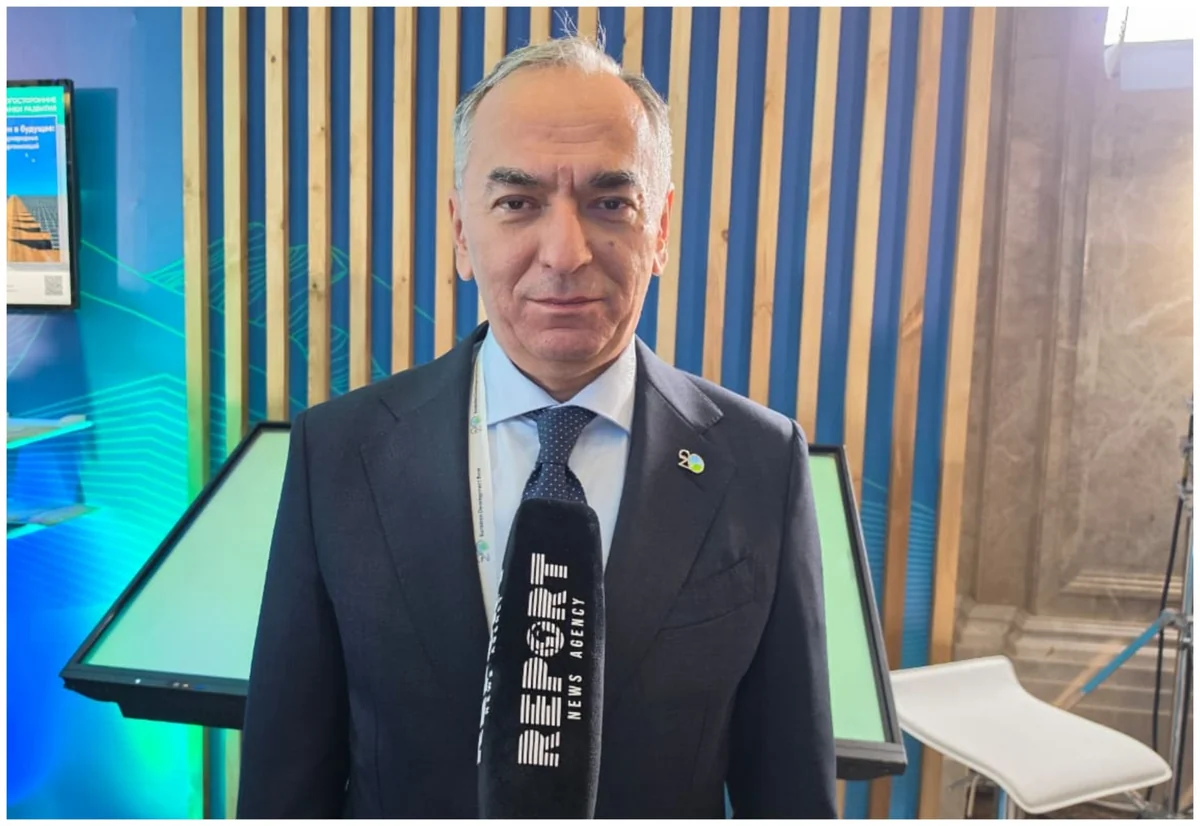
In an interview with Report, Khurram Teshabayev, Deputy Minister of Investments, Industry and Trade of Uzbekistan, discussed the projects expected to drive closer economic ties between the two countries, the progress of industrial cooperation, the launch of a new automobile plant in Hajigabul, and prospects in logistics and green energy.
Below is the full interview.
– Uzbekistan and Azerbaijan have set a target of reaching $1 billion in bilateral trade by 2030. Given the 40% growth recorded in 2025, isn't this goal too modest? Are there plans to accelerate progress through new trade houses in Baku and Shusha?
We view the $1 billion by 2030 target as both realistic and strategically important. It reflects the current level of economic cooperation and the substantial opportunities for further expansion. The recent positive trade dynamics, including strong growth in 2025, demonstrate the steady strengthening of economic ties.
In January–March 2026, bilateral trade reached $80.1 million, up 42.5% year-on-year (+$23.9 million). Uzbekistan's exports amounted to $53.9 million, while imports totaled $26.2 million. These figures reflect stable mutual demand, stronger business ties, and deeper cooperation between entrepreneurs in both countries.
At the same time, our policy is aimed not only at increasing trade volumes but also at improving the quality of trade by expanding industrial cooperation, establishing joint manufacturing facilities, and increasing the share of value-added products.
It is also important to note that achieving the target remains a priority for the leaders of both countries and is regularly discussed during bilateral meetings at both the presidential and intergovernmental levels.
To further stimulate growth, it is necessary to focus on priority directions such as direct business cooperation, mutual investment, and the modernization of trade and logistics infrastructure. Azerbaijan already hosts Uzbek trade representations, a trade house, an agricultural house, and a "Made in Uzbekistan" showroom in Baku, all of which help promote Uzbek products and strengthen business ties.
We also see further expansion of this infrastructure as an effective tool for boosting trade and business activity. If current trends continue and joint initiatives are implemented consistently, reaching the $1 billion target ahead of schedule cannot be ruled out.
– The potential investment portfolio between Uzbekistan and Azerbaijan has recently been estimated at around $10 billion. Which sectors will drive these investments, and which projects are expected to become the main engines of growth?
The $10 billion investment portfolio is not a projection or an abstract figure. It represents a combination of ongoing and prospective projects that reflect the high level of economic partnership between Uzbekistan and Azerbaijan.
Several strategic sectors will serve as the key growth drivers.
Urban development and tourism are among the fastest-growing areas. Large-scale residential, commercial, and hospitality projects are being implemented, many involving international developers.
Mining and geological exploration also occupy an important place, laying the foundation for long-term investment and resource development.
Industrial cooperation in agriculture remains another priority. The creation of agro-industrial clusters and facilities for deep processing of agricultural products will increase value added within the region and boost exports of processed goods.
Cooperation is also expanding in the automotive and electrical engineering industries through greater production localization, joint vehicle assembly, and the development of new manufacturing capacities, helping establish regional supply chains.
The textile industry also remains strategically important, with joint projects focused on deeper processing of raw materials, expanding exports, and creating new jobs.
The current investment portfolio already includes more than 20 active projects worth approximately $6 billion, along with over 25 prospective initiatives valued at nearly $1.5 billion that are at various stages of preparation.
Among the flagship projects are the construction of an international tourist center on the shores of the Charvak Reservoir with Agalarov Development worth $5 billion, the development of The Ritz-Carlton hotel in Tashkent with PASHA Holding investing $200 million, the establishment of a cotton-textile cluster by Global Textile in Azerbaijan worth $104.8 million, geological exploration projects with SOCAR in the Ustyurt region totaling $76 million, and the construction of facilities producing dry construction mixes and gypsum boards in the Kashkadarya region with investments of $50 million.
These projects demonstrate that the investment portfolio is already being implemented and continues to expand through new joint initiatives in priority sectors.
– The Azerbaijan-Uzbekistan Investment Fund is already financing 15 projects worth around $360 million. Which of them do you consider the most significant? Is there a possibility of increasing the fund's capital?
The Azerbaijan-Uzbekistan Investment Fund has already become one of the key instruments for the practical implementation of bilateral investment initiatives. Its portfolio currently includes projects with the potential to generate a long-term multiplier effect for the economies of both countries.
Among its flagship projects are those in the automotive industry, which support industrial cooperation, create jobs, and foster local supplier networks. Cotton-textile clusters also play an important role by enabling deep processing of raw materials and strengthening export potential.
Projects in agricultural processing, including dairy production, are helping create sustainable value chains in agriculture. Cooperation in geology and mining remains promising, while transport and logistics initiatives strengthen the transit potential of both countries and improve the efficiency of international cargo transportation.
What all these projects have in common is their strategic importance, high scalability, and ability to serve as a foundation for expanding industrial cooperation.
As for increasing the fund's capital, this issue is indeed under consideration. As larger projects in energy, transport infrastructure, logistics, and industry move forward, expanding the fund's capitalization appears both logical and economically justified. This would significantly increase financing capacity and provide a further boost to investment cooperation between Uzbekistan and Azerbaijan.
– The Industrial Cooperation Program between Uzbekistan and Azerbaijan was approved last year. What progress has already been achieved?
The program has already moved from the conceptual stage to practical implementation, with tangible results achieved in several areas and many projects at stage of active launch.
The establishment of cotton clusters in Azerbaijan is progressing steadily. Land plots have been allocated, anchor investors have been identified, and management structures have been formed. The projects are based on Uzbekistan's successful "from field to finished product" model, covering all stages from cotton cultivation, deep processing, to textile manufacturing with high added value that helps to significantly increase the export potential.
Projects in the dairy sector are being implemented in phases. The first stage follows a pilot approach focused on introducing modern processing technologies, improving livestock productivity, and establishing an efficient system for the production and distribution of dairy products. As practical results are achieved, these projects can be scaled up.
Another important area of cooperation is the development of industrial infrastructure. In recent years, Uzbekistan has accumulated extensive experience in establishing technology parks and industrial zones, particularly in high-tech and processing industries. We are ready to share this expertise with our Azerbaijani partners and view the development of technology parks as one of the most promising tools for deepening industrial cooperation.
Overall, we are witnessing a gradual transition from individual pilot projects to the creation of comprehensive industrial ecosystems based on production localization, the adoption of modern technologies, and the generation of high value-added products.
– The joint Chevrolet vehicle production project in Hajigabul has already delivered strong results, with more than 9,000 vehicles assembled. What stage has the construction of the full-cycle plant reached, and what level of production localization is planned for Azerbaijan?
The Hajigabul automotive manufacturing project is one of the most successful examples of industrial cooperation between Uzbekistan and Azerbaijan. The launch of semi-knocked-down (SKD) assembly of Chevrolet vehicles and Isuzu buses in 2022 demonstrated the strong potential of this partnership and laid a solid foundation for the project's further expansion.
Today, the project is entering its next phase-the construction of a full-cycle manufacturing plant. The second stage is being implemented jointly by Azermash CP and UzAutoSanoat JSC, with total investments amounting to $84.3 million.
The main preparatory work has already been completed. Suppliers have been selected, orders have been placed for production equipment and assembly lines, and construction of the new manufacturing complex is underway. Among other models, the facility will produce the Chevrolet Cobalt.
The plant is scheduled to become operational in mid-2027. Once commissioned, production will transition from SKD assembly to a full-scale manufacturing cycle, significantly increasing output and expanding the range of vehicles produced.
One of the key objectives of the second phase is the gradual increase in production localization. This includes expanding the use of components manufactured in Azerbaijan, developing a network of local suppliers, and introducing more advanced manufacturing processes. These measures will increase domestic value added, support the growth of related industries, and contribute to the development of a modern automotive manufacturing ecosystem in Azerbaijan.
– Both countries are investing heavily in renewable energy. Which joint green energy projects are currently at the forefront of bilateral cooperation? How realistic are the plans to export green electricity and hydrogen across the Caspian Sea to Europe?
Cooperation in green energy is one of the most promising areas of partnership between our two countries.
Practical work is already underway on projects to export electricity across the Caspian Sea using subsea infrastructure, as well as on the development of green hydrogen production with the aim of supplying European markets.
A major milestone was the signing by Uzbekistan, Azerbaijan, and Kazakhstan of the Strategic Partnership Agreement on the Development and Transmission of Green Energy. To implement this initiative, the joint venture Green Corridor Union was established in Baku and is currently preparing the project's feasibility study.
The project envisages the construction of new power generation capacity that will enable Uzbekistan to export between 2 GW and 5 GW of clean electricity to Europe in the future.
These are undoubtedly large-scale and technically complex projects requiring substantial investment and close international coordination. At the same time, their strategic value is difficult to overstate. They will help integrate Central Asia and the South Caucasus into the European energy market, diversify export routes, and contribute to the global energy transition.
– The Port of Baku is becoming one of the key links in the Middle Corridor. How do you assess its importance for Uzbek exporters? Are additional support measures being considered to reduce transport costs for businesses?
The Port of Baku already plays a pivotal role in providing Uzbek exports with access to international markets via the Middle Corridor and has become one of the region's strategically important logistics hubs for strengthening transit connectivity.
We highly value the efficiency of its infrastructure for Uzbek exporters. In recent years, cargo volumes along this route have grown steadily, the range of exported goods has expanded, and cooperation between the transport and logistics operators of our two countries has continued to deepen.
Together with our Azerbaijani partners, we are working to further enhance the corridor's competitiveness. In particular, we are discussing additional support measures for Uzbek exporters, including discounts on cargo handling services, integrated tariff solutions, streamlined logistics procedures, and priority treatment for containerized and export cargo.
At the same time, several projects are being implemented to strengthen transport infrastructure and maritime logistics. These include the establishment of a joint fleet on the Caspian Sea and the creation of a joint venture between Uztemiryulkargo JSC and the Azerbaijan Caspian Shipping Company (ASCO). These initiatives will improve the efficiency of multimodal transport, make supply chains more resilient, and reduce logistics costs for exporters.
We are confident that further deepening cooperation in transport and logistics will become one of the key drivers of expanding bilateral trade, enhancing the competitiveness of the Middle Corridor, and strengthening the transit potential of the entire region.
– Plans have previously been announced to establish a joint Uzbekistan-Azerbaijan logistics center. What stage has the project reached, where is it expected to be located, and what impact will it have on cargo delivery times and costs?
The establishment of a joint logistics center is one of the flagship infrastructure projects aimed at developing transport and logistics cooperation between Uzbekistan and Azerbaijan within the framework of the Middle Corridor.
The preferred location is an area integrated with the infrastructure of the Port of Baku, Azerbaijan's railway network, and the main international transport routes linking Central Asia, the South Caucasus, and Europe.
The project is becoming even more relevant in light of the construction of the China–Kyrgyzstan–Uzbekistan railway, which is expected to significantly increase cargo flows from China and Central Asia toward the Caspian region. In this context, the Port of Baku will serve as a critical transit hub for onward shipments to European markets via the Middle Corridor.
The logistics center will provide cargo consolidation, storage and processing facilities, multimodal container handling, as well as expedited customs and transit clearance. This will optimize logistics processes, make supply chains more predictable, shorten delivery times along the Tashkent–Baku route, and enhance the competitiveness of freight transportation.
We view this project not only as a bilateral initiative but also as an important component of the emerging Eurasian transport architecture aimed at strengthening connectivity between Asia and Europe.
– Experts have proposed creating so-called "mirror" special economic zones, where companies from Uzbekistan and Azerbaijan could operate under a one-stop-shop model and benefit from reciprocal tax and customs incentives. How realistic is the implementation of such a model?
The idea of establishing "mirror" special economic zones is of considerable interest and could become an effective mechanism for further deepening trade, investment, and industrial cooperation between Uzbekistan and Azerbaijan.
Although the initiative has not yet entered the implementation stage, the concept is fully consistent with our approach to improving the investment climate. It is based on creating the most business-friendly environment possible through a one-stop-shop system, tax, customs, and administrative incentives, and simplified procedures for investors.
At present, our primary focus is on enhancing the effectiveness of existing cooperation mechanisms, including special economic zones, industrial parks, technology parks, and joint investment projects. These instruments have already proven their effectiveness and continue to attract strong interest from the business communities of both countries.
At the same time, we see significant potential for closer cooperation between the free economic zones of Uzbekistan and Azerbaijan through the exchange of best practices, production localization, the creation of joint industrial clusters, and the integration of manufacturing and logistics value chains.
As industrial cooperation expands and mutual investment continues to grow, we believe the concept of more integrated cooperation formats-including mirror special economic zones-could move from discussion to practical implementation. Such a mechanism would provide an additional impetus for attracting investment, developing joint manufacturing projects, and strengthening economic integration between our two countries.
Author